 EN
EN

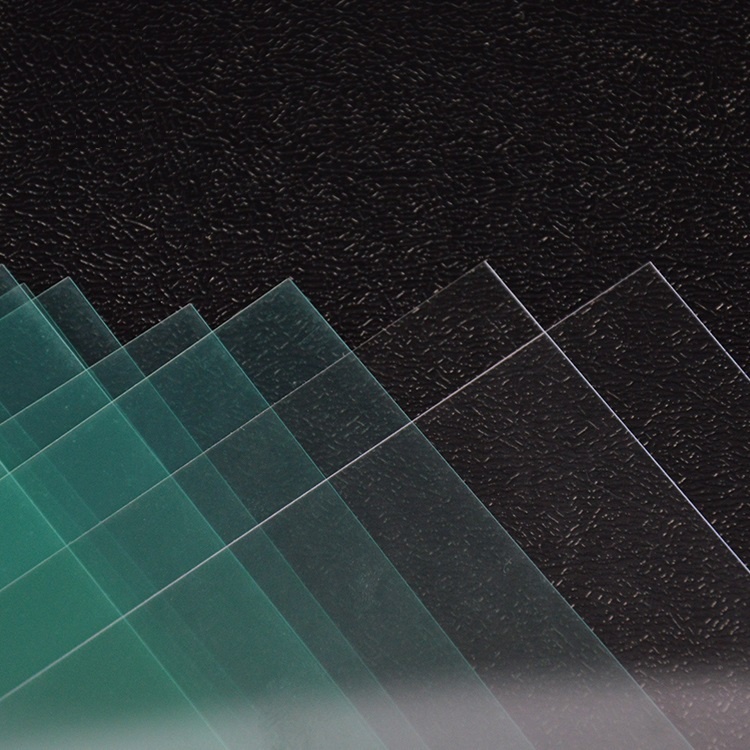
The identity card manufacturing industry demands base materials that deliver exceptional durability, optical clarity, and printability while maintaining consistent performance across millions of production cycles. PC sheet has emerged as a preferred substrate for ID card production due to its unique combination of mechanical strength, dimensional stability, and processing versatility. Understanding how PC sheet performs in this specialized application requires examining its material properties, manufacturing compatibility, and real-world performance characteristics that directly impact card longevity and security feature integration.
Modern identification documents must withstand years of handling, environmental exposure, and mechanical stress while retaining critical security features and visual information. The base material selection fundamentally determines whether an ID card meets international standards for durability testing, such as ISO/IEC 7810 specifications that govern card dimensions and physical characteristics. PC sheet demonstrates superior performance in bend testing, impact resistance, and thermal cycling compared to alternative polymers, making it particularly suitable for high-security credentials that require extended service life in demanding environments ranging from wallet storage to outdoor exposure.
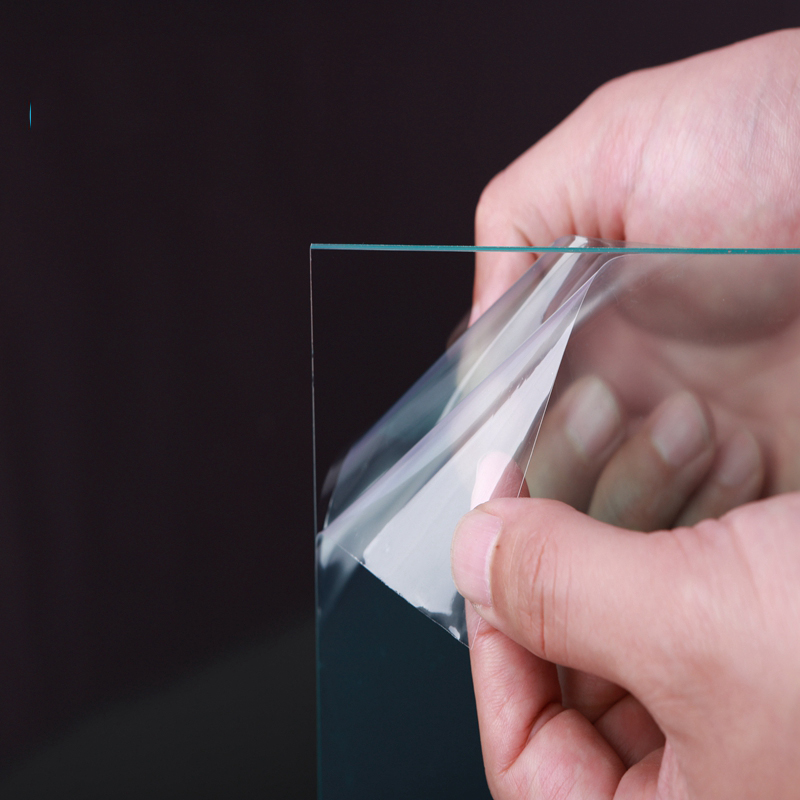
Material Properties That Define PC Sheet Performance in ID Card Manufacturing
Optical Clarity and Light Transmission Characteristics
The optical performance of PC sheet directly influences the visual quality and security feature visibility in finished ID cards. High-grade polycarbonate maintains light transmission rates exceeding 88 percent across visible wavelengths, enabling crisp reproduction of printed graphics, photographs, and microtext security elements. This transparency consistency across the sheet thickness allows for reliable UV-reactive ink performance and holographic overlay integration without optical distortion. Card manufacturers utilizing PC sheet can achieve superior color accuracy in dye-sublimation printing processes, where light transmission uniformity directly correlates with image fidelity across production runs.
The refractive index stability of PC sheet under varying temperature conditions ensures that laminated security features maintain consistent optical properties throughout the card's service life. Unlike materials that exhibit yellowing or haze development under prolonged UV exposure, properly formulated PC sheet incorporates UV stabilizers that preserve optical clarity for five to ten years of typical use. This long-term transparency retention proves critical for cards containing transparent windows, laser-engraved data, or optically variable devices that require precise light manipulation to function as intended authentication elements.
Mechanical Strength and Impact Resistance
The exceptional impact strength of PC sheet stems from its amorphous polymer structure, which allows molecular chains to absorb and dissipate energy without brittle fracture. Standard ID card applications benefit from polycarbonate's notched Izod impact resistance values typically ranging from 600 to 850 J/m, significantly outperforming polyester and PVC alternatives in drop testing and flex-cycle evaluations. This mechanical robustness enables PC sheet to maintain structural integrity through repeated bending stress, such as occurs when cards are stored in tight wallet compartments or subjected to accidental flexing during daily handling.
The yield strength characteristics of PC sheet allow card manufacturers to produce thinner substrates without compromising durability standards. A 300-micrometer PC sheet layer can achieve mechanical performance equivalent to 500-micrometer PVC constructions, enabling weight reduction and material cost optimization while meeting international card stiffness requirements. This strength-to-thickness advantage becomes particularly valuable in multi-layer card constructions that incorporate embedded electronics, antennas, or additional security layers, where minimizing total card thickness while maintaining structural integrity presents an ongoing design challenge.
Dimensional Stability Across Temperature Ranges
Dimensional stability determines whether ID cards maintain precise geometric specifications throughout their production process and service life. PC sheet exhibits a coefficient of linear thermal expansion approximately 65 × 10⁻⁶ per degree Celsius, which while higher than some engineering polymers, remains predictable and manageable through proper processing parameter control. Card manufacturers calibrate lamination temperatures, cooling rates, and pressure profiles to compensate for this expansion behavior, ensuring finished cards meet the tight dimensional tolerances specified in ISO standards that govern card reader compatibility worldwide.
The glass transition temperature of PC sheet, typically ranging from 145 to 150 degrees Celsius, provides sufficient thermal headroom for standard card lamination processes that operate between 120 and 140 degrees Celsius. This processing window allows complete bonding of card layers while preventing material distortion or optical property degradation. Unlike lower-temperature polymers that may experience creep deformation under sustained load at elevated ambient temperatures, PC sheet maintains dimensional integrity in applications ranging from cold climate storage to vehicular environments where dashboard temperatures may exceed 70 degrees Celsius.
Processing Compatibility and Manufacturing Integration
Lamination Process Performance
The thermal bonding characteristics of PC sheet enable reliable multi-layer card construction through precisely controlled lamination cycles. Polycarbonate's melt flow behavior at processing temperatures allows molecular interdiffusion between adjacent PC sheet layers, creating bonds that approach the base material strength without requiring intermediate adhesive layers. This direct thermal bonding eliminates potential delamination failure modes associated with adhesive aging, while simplifying card construction and reducing material costs. Manufacturers achieve optimal lamination results by maintaining platen temperatures between 175 and 190 degrees Celsius with dwell times of 15 to 25 minutes under pressures ranging from 150 to 200 psi.
The compatibility of PC sheet with various overlay films and protective coatings extends its application versatility in ID card production. Manufacturers successfully bond holographic foils, UV-protective layers, and tactile security features to polycarbonate substrates using modified lamination parameters that accommodate the different thermal characteristics of these materials. The chemical resistance of PC sheet to plasticizers and stabilizers in overlay films prevents migration-related defects that can compromise card appearance or security feature performance over time, ensuring long-term bonding integrity across diverse card construction architectures.
Printing and Personalization Compatibility
The surface chemistry of PC sheet influences ink adhesion, print resolution, and image permanence in card personalization processes. Untreated polycarbonate surfaces exhibit relatively low surface energy, typically 42 to 44 dynes per centimeter, which may require corona treatment or chemical priming to achieve optimal ink wetting for certain printing technologies. However, modern dye-sublimation printing systems have been specifically optimized for direct printing onto PC sheet surfaces, utilizing heat-activated dye transfer that chemically bonds colorants into the polymer surface layer rather than relying on mechanical adhesion alone.
Laser engraving compatibility represents a critical performance advantage of PC sheet in high-security ID card applications. The controlled ablation characteristics of polycarbonate under focused laser irradiation enable creation of permanent, high-resolution grayscale images and data fields that cannot be altered without obvious evidence of tampering. CO2 and fiber laser systems operating at specific wavelengths and power densities can produce engraved features in PC sheet with edge resolution better than 600 dpi, sufficient for photographic reproduction and fine-line security patterns. This laser marking capability, combined with the material's resistance to chemical and physical erasure attempts, makes PC sheet particularly suitable for documents requiring maximum security and authenticity verification.
Die Cutting and Edge Finishing
The machinability of PC sheet affects production efficiency and finished card quality in die-cutting operations that separate individual cards from laminated sheets. Polycarbonate's toughness requires sharp cutting tools and properly adjusted cutting pressures to achieve clean edges without microcracking or delamination at card perimeters. Rotary die cutting systems with carbide or diamond-coated cutting rules typically deliver optimal results, producing cards with smooth edges that resist crack propagation during handling. The cutting process parameters must account for PC sheet thickness and layer count, with multi-layer constructions requiring precise tool depth control to ensure complete separation without damaging underlying layers.
Edge finishing processes such as radius milling or chamfering enhance the tactile quality and durability of PC sheet-based ID cards. The polymer's resistance to stress cracking allows application of edge treatments that slightly round sharp corners, reducing the likelihood of edge-initiated fractures during wallet storage or handling. These finishing operations also improve card aesthetics and user perception of quality, contributing to the premium feel expected in government-issued credentials and high-value access cards. Manufacturers optimize edge finishing parameters to balance production throughput with the finished edge quality requirements specified for different card applications and security levels.
Durability Performance in Real-World ID Card Applications
Abrasion Resistance and Surface Hardness
The surface hardness of PC sheet, typically measuring between 115 and 120 on the Rockwell M scale, provides excellent resistance to scratching and abrasion during normal ID card handling. This hardness level positions polycarbonate favorably against alternative card materials, enabling cards to maintain legible printed information and intact security features through years of repeated wallet insertion, reader swiping, and surface contact. Standard abrasion testing using Taber abrader methods demonstrates that PC sheet surfaces retain optical clarity and print definition after thousands of abrasion cycles that would render softer polymer cards illegible or visually degraded.
The scratch resistance characteristics of PC sheet can be further enhanced through application of hard coat treatments that increase surface hardness to values approaching 3H on the pencil hardness scale. These coatings, typically applied through UV-cured acrylic or silicone-based formulations, create a sacrificial barrier that absorbs minor abrasion events while preserving the underlying PC sheet integrity. For ID cards subjected to particularly demanding environments, such as industrial facility access badges or military identification, hard-coated PC sheet constructions deliver significantly extended service life compared to uncoated alternatives, reducing replacement frequency and associated issuance costs.
Chemical Resistance and Environmental Stability
The chemical resistance profile of PC sheet determines how ID cards perform when exposed to common substances encountered during daily use and storage. Polycarbonate demonstrates excellent resistance to aqueous solutions, weak acids, and most organic compounds at room temperature, allowing cards to withstand exposure to hand lotions, cleaning agents, and perspiration without surface degradation or print damage. However, PC sheet exhibits sensitivity to certain solvents, strong bases, and aromatic hydrocarbons, which manufacturers must consider when specifying protective coatings or user handling guidelines for specific credential applications.
Environmental stress cracking resistance represents an important durability consideration for PC sheet in ID card applications. While polycarbonate offers superior mechanical properties, sustained exposure to certain chemicals under mechanical stress can initiate crack formation that compromises card integrity. Modern PC sheet formulations incorporate stress-crack inhibitors and molecular weight optimization to minimize this susceptibility, enabling production of cards that maintain structural integrity even when exposed to moderately aggressive environments. Understanding these material limitations allows card designers to specify appropriate protective measures, such as overlay films or edge sealing, for applications where chemical exposure risk is elevated.
Bend Testing and Flex Cycle Performance
Bend testing protocols specified in international card standards provide quantitative assessment of how PC sheet-based ID cards withstand flexing forces encountered during normal use. ISO/IEC 10373 test methods subject cards to controlled bending around mandrels of specified diameters while monitoring for visible damage, delamination, or functional impairment. PC sheet constructions consistently pass these rigorous tests, withstanding bend radii down to 10 millimeters and flex cycles exceeding 1,000 repetitions without structural failure or visual defects that would compromise card functionality or appearance.
The elastic recovery characteristics of PC sheet contribute significantly to its superior flex performance compared to more brittle card materials. After removal of bending stress, polycarbonate-based cards return to their original flat geometry without permanent deformation or memory effects that could interfere with card reader operation. This elastic behavior, combined with the material's high yield strain capability, enables PC sheet to accommodate the repeated flexing cycles that occur during years of wallet storage and handling. For cards incorporating embedded electronics or contact pads, the flex tolerance of PC sheet helps maintain electrical connection integrity throughout the card's service life, reducing failure rates associated with solder joint fatigue or conductor fracture.
Security Feature Integration and Authentication Performance
Holographic Overlay Compatibility
The optical and thermal properties of PC sheet enable reliable integration of holographic security overlays that provide visual authentication features. The smooth, dimensionally stable surface of polycarbonate serves as an ideal substrate for hot-stamped or laminated holographic films, which require intimate contact and consistent adhesion to produce the intended optical effects. The thermal stability of PC sheet during hologram application processes ensures that base card dimensions and embedded features remain undistorted while the holographic layer bonds properly to the card surface.
The transparency of PC sheet allows implementation of transparent window features that incorporate holographic elements visible from both card faces, creating sophisticated authentication elements difficult to counterfeit. These through-body holographic features leverage the optical clarity and precise thickness control achievable with polycarbonate to produce diffraction patterns and color-shift effects that serve as primary security indicators. The durability of PC sheet ensures these holographic features resist delamination, scratching, and environmental degradation throughout the card's intended service life, maintaining their authentication effectiveness from issuance through eventual expiration.
Laser Engraving Security Applications
The laser-reactive characteristics of PC sheet enable creation of permanent, tamper-evident personalization and security features within the card body itself. Laser engraving systems create grayscale images by precisely controlling material ablation depth, producing photographs and text fields that exist as physical topography within the polycarbonate structure rather than surface-applied ink. This engraving approach eliminates concerns about print wear or chemical removal, as any attempt to alter laser-engraved information requires material removal that produces obvious evidence of tampering.
Advanced laser engraving techniques exploit the multi-layer structure possible with PC sheet constructions to create security features visible only under specific lighting conditions or viewing angles. By engraving information at different depths within a laminated polycarbonate structure, card designers create covert features that remain invisible during casual inspection but become apparent under transmitted light or magnification. The precise thermal control achievable during laser engraving of PC sheet prevents heat-affected zone expansion beyond the intended engraving area, enabling creation of fine-line security patterns and microtext that challenge counterfeiting attempts while remaining machine-readable for automated authentication systems.
Embedded Electronics and Smart Card Integration
The dielectric properties and mechanical protection capabilities of PC sheet make it well-suited for ID cards incorporating embedded RFID antennas, contact pads, and integrated circuit chips. The dimensional stability of polycarbonate during lamination ensures precise positioning of electronic components and reliable electrical interconnections between card layers. The impact resistance of PC sheet provides mechanical protection for sensitive electronic components against the flexing and impact forces encountered during card handling and reader insertion cycles.
The RF transparency of PC sheet at frequencies used for contactless card operation, typically 13.56 MHz for ISO 14443-compliant systems, allows electromagnetic field penetration necessary for reader communication without requiring antenna modifications or power-hungry amplification. The low dielectric loss tangent of polycarbonate minimizes signal attenuation, enabling reliable read ranges that meet performance specifications for access control and payment applications. For dual-interface cards incorporating both contact and contactless functionality, PC sheet thickness and layer arrangement can be optimized to protect contact pads from wear while maintaining RF performance, delivering the multi-function capability increasingly demanded in modern identity credentials.
FAQ
What thickness of PC sheet is typically used for standard ID card applications?
Standard ID cards conforming to ISO/IEC 7810 specifications utilize PC sheet constructions with total thickness of 0.76 millimeters plus or minus 0.08 millimeters. This thickness typically comprises multiple polycarbonate layers ranging from 125 to 300 micrometers each, laminated together to achieve the required total card thickness while accommodating embedded security features, print layers, and protective overlays. The specific layer configuration varies based on security level requirements and embedded feature complexity, with high-security credentials often incorporating five or more distinct PC sheet layers.
How does PC sheet compare to PVC for ID card durability and longevity?
PC sheet significantly outperforms PVC in mechanical durability, impact resistance, and service life for demanding ID card applications. Polycarbonate-based cards typically maintain functionality and appearance for seven to ten years under normal use conditions, compared to three to five years for PVC alternatives. The superior flex resistance, scratch hardness, and environmental stability of PC sheet result in lower card replacement rates and reduced lifecycle costs despite higher initial material expenses. Government credentials, national ID cards, and high-security access cards increasingly specify PC sheet construction due to these durability advantages.
Can PC sheet-based ID cards be recycled at end of life?
Pure polycarbonate ID cards without embedded electronics, metallic layers, or mixed-material overlays can theoretically be recycled through specialized PC sheet recycling streams. However, practical recycling of ID cards faces challenges due to the small individual card size, mixed-material constructions common in modern credentials, and security considerations requiring destruction rather than reprocessing of identity documents. Some card manufacturers have developed take-back programs that collect expired credentials for controlled destruction and material recovery, though widespread recycling infrastructure for PC sheet-based ID cards remains limited compared to other polycarbonate applications.
What surface treatments improve printing quality on PC sheet for card personalization?
Corona discharge treatment effectively increases PC sheet surface energy from approximately 42 dynes per centimeter to 52-56 dynes per centimeter, significantly improving ink wetting and adhesion for offset printing and dye-sublimation personalization processes. This treatment modifies the surface chemistry through oxidation without affecting bulk material properties or optical clarity. Alternatively, chemical primers based on chlorinated polyolefin or modified acrylic formulations create intermediate bonding layers that enhance adhesion for specific ink systems. Modern card production facilities typically employ in-line corona treatment immediately before printing to ensure consistent surface activation and optimal print quality across production runs.