 EN
EN


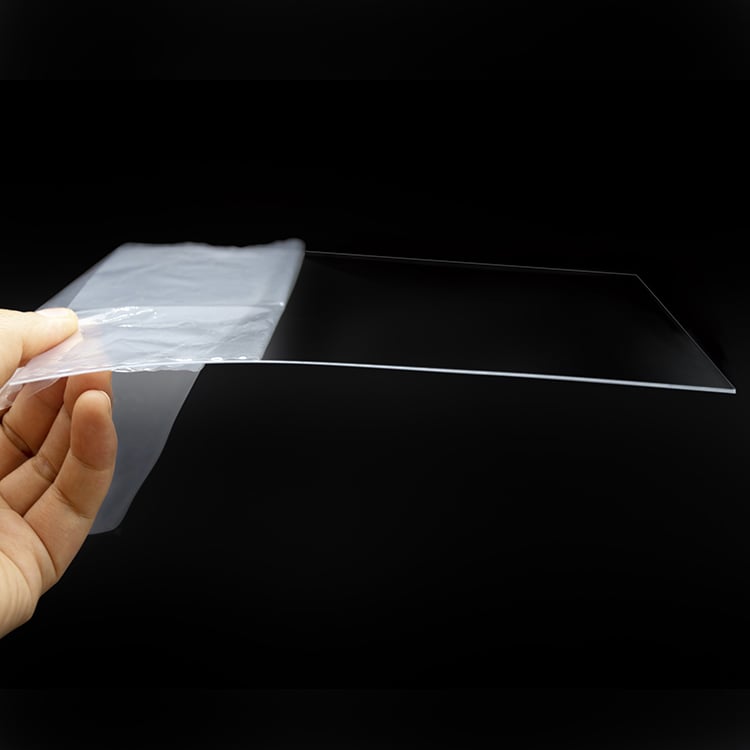
Electronic component packaging demands materials that combine protective performance with economic viability, and PVC sheet for electronic component packaging has become an industry standard for good reason. Factories worldwide rely on this versatile polymer solution to safeguard sensitive electronics throughout storage, transportation, and retail display cycles. The selection of packaging materials in electronics manufacturing is not arbitrary—it stems from rigorous evaluation of mechanical properties, electrostatic behavior, chemical resistance, and cost-effectiveness. Understanding why manufacturers consistently choose PVC sheets reveals critical insights into material science, supply chain economics, and quality assurance protocols that define modern electronics packaging strategies.
The electronics manufacturing sector faces unique packaging challenges that separate it from other industries. Components ranging from integrated circuits to printed circuit boards require protection against physical damage, moisture ingress, electrostatic discharge, and contamination during multi-stage distribution networks. PVC sheet for electronic component packaging addresses these requirements through a combination of inherent material characteristics and processing flexibility that allows customization for specific application needs. This article examines the technical, operational, and economic factors that drive factory adoption of PVC sheets, exploring how material properties translate into tangible manufacturing advantages and why alternative materials often fall short in comparative performance assessments.
Material Properties That Drive Factory Adoption
Superior Dimensional Stability Under Variable Conditions
Factories prioritize PVC sheet for electronic component packaging primarily because of its exceptional dimensional stability across temperature fluctuations and humidity variations. Unlike many thermoplastic alternatives, rigid PVC maintains consistent form factor from production environments through international shipping to end-user facilities. This stability prevents warping that could compromise seal integrity or allow components to shift within packaging cavities. Manufacturing facilities operating in different climate zones particularly value this characteristic, as it eliminates the need for climate-controlled storage and reduces rejection rates caused by packaging deformation. The material's low coefficient of thermal expansion ensures that vacuum-formed trays and clamshells retain precise tolerances even when exposed to temperature swings during container shipping or warehouse storage.
The crystalline structure of PVC contributes to its resistance to creep and stress relaxation, phenomena that plague softer polymers in long-term storage applications. Electronic components often remain in packaging for months between production and installation, during which time packaging must maintain protective geometry without sagging or developing gaps. Factories conducting accelerated aging tests consistently find that PVC sheet for electronic component packaging outperforms polyethylene and polypropylene alternatives in dimensional retention. This reliability translates directly to reduced product damage claims and lower warranty costs, making the material choice financially advantageous beyond initial material costs. Quality control managers appreciate that PVC's predictable behavior simplifies validation protocols and reduces the frequency of incoming material inspections.
Intrinsic Electrostatic Discharge Control Properties
Electrostatic discharge represents one of the most insidious threats to electronic components, capable of causing latent defects that manifest only after installation. PVC sheet for electronic component packaging can be formulated with antistatic additives or conductive fillers that dissipate charge accumulation, preventing voltage differentials that lead to component damage. Factories specify these modified formulations for sensitive semiconductor devices, where even minimal charge transfer can degrade performance or cause immediate failure. The ability to tailor electrical resistivity across a wide range—from insulative to static-dissipative to conductive—allows packaging engineers to match material properties precisely to component sensitivity classifications established by industry standards such as ANSI/ESD S20.20.
Manufacturing facilities benefit from PVC's compatibility with various ESD control mechanisms without compromising other essential properties. Unlike some materials that become brittle when loaded with conductive fillers, properly formulated PVC sheet for electronic component packaging maintains impact resistance and thermoforming characteristics essential for automated packaging operations. This balance enables factories to implement comprehensive ESD protection strategies without introducing new failure modes or processing complications. The material's surface resistivity can be verified through standard test methods, allowing incoming quality control to confirm electrical properties match specifications. Factories appreciate this measurability, as it supports documented compliance with customer requirements and regulatory standards governing electronics handling.
Chemical Resistance in Manufacturing Environments
Electronic component manufacturing involves numerous chemical processes including flux residues, cleaning solvents, and protective coatings that may contact packaging materials during production or rework operations. PVC sheet for electronic component packaging demonstrates broad chemical resistance that prevents degradation when exposed to isopropyl alcohol, mild acids, alkaline cleaning solutions, and most hydrocarbon-based compounds commonly found in electronics assembly facilities. This inertness ensures that packaging maintains integrity even when components undergo additional processing steps while still in protective trays. Factories value this compatibility because it eliminates the need for repackaging between manufacturing stages, reducing handling costs and contamination risks.
The material's resistance to moisture absorption prevents dimensional changes and property degradation in humid environments typical of electronics manufacturing regions. Unlike hygroscopic materials that require desiccant storage and pre-drying before thermoforming, PVC sheet for electronic component packaging maintains stable processing characteristics regardless of ambient humidity levels. This consistency simplifies production planning and reduces scrap rates associated with moisture-related defects. Manufacturing engineers particularly appreciate that PVC does not require special environmental controls during storage, allowing standard warehouse conditions without risk of material degradation. The chemical stability also extends shelf life, permitting factories to maintain larger material inventories without concern for time-dependent property changes that affect processability or performance.
Economic Factors Influencing Material Selection
Cost-Performance Optimization in High-Volume Production
The electronics industry operates on thin margins where packaging costs directly impact competitiveness, making material economics a primary selection criterion. PVC sheet for electronic component packaging offers an advantageous balance between performance characteristics and material cost that alternative polymers struggle to match. At comparable thicknesses, PVC typically costs less than polycarbonate, PETG, or specialty engineering plastics while delivering adequate protection for most electronic components. Factories conducting total cost analyses consistently find that PVC's combination of material pricing, processing efficiency, and damage prevention delivers superior value across product lifecycles. Procurement departments particularly value the material's stable pricing relative to commodity resins derived directly from crude oil, as PVC's production pathway through chlorine chemistry provides some insulation from petroleum market volatility.
High-volume manufacturers benefit from PVC's excellent thermoformability, which enables rapid cycle times and high cavity counts in multi-cavity tooling configurations. The material's processing window tolerates variation in heating and forming parameters, reducing scrap rates and minimizing production downtime for adjustments. Factories report that PVC sheet for electronic component packaging consistently achieves acceptable part quality with less precise process control compared to materials like polystyrene or ABS, which exhibit narrower forming windows. This forgiving nature translates to lower training requirements for machine operators and reduced technical support costs. Additionally, PVC's compatibility with standard industrial thermoforming equipment eliminates capital investment barriers, allowing existing production infrastructure to accommodate electronics packaging without specialized machinery purchases.
Supply Chain Reliability and Global Availability
Manufacturing continuity depends on reliable material supply, and PVC sheet for electronic component packaging benefits from a mature, geographically distributed supply network spanning multiple continents. Factories can source material from numerous qualified suppliers, reducing dependence on single sources and mitigating supply disruption risks. This availability proves particularly valuable during supply chain stress events when specialty materials face allocation constraints. Procurement teams value the ability to qualify multiple suppliers without significant property variations between sources, as PVC formulations adhere to well-established industry standards that ensure consistency. The material's widespread production also means that local sourcing options often exist, reducing transportation costs and lead times while supporting sustainability objectives related to carbon footprint reduction.
The established nature of PVC manufacturing infrastructure provides stability in material specifications and eliminates concerns about supplier discontinuation or formulation changes that plague newer specialty polymers. Factories developing packaging for products with multi-year lifecycles require confidence that materials will remain available with consistent properties throughout production runs. PVC sheet for electronic component packaging meets this requirement through decades of proven supply continuity and standardized formulation practices. Quality assurance managers appreciate that material property databases are extensive and well-documented, facilitating design validation and regulatory compliance documentation. The material's long market history also means that processing troubleshooting knowledge is widely available, reducing the risk of production interruptions due to unfamiliar material behavior.
Tooling Investment and Design Flexibility
Thermoforming tooling represents a significant capital investment in packaging operations, and PVC sheet for electronic component packaging enables cost-effective tool design through its forgiving forming characteristics. Aluminum tooling, which costs substantially less than hardened steel alternatives, performs adequately for PVC forming applications even in moderate to high production volumes. Factories launching new product packaging can minimize initial investment while maintaining the option to upgrade to production tooling if volumes justify the expense. The material's ability to form deep draws and sharp details with relatively simple tooling configurations reduces design constraints, allowing packaging engineers to optimize cavity geometry for component protection and automated handling without tooling cost penalties.
Design iteration cycles benefit from PVC's rapid prototype capabilities, as sample tooling can be produced quickly and inexpensively for form-fit-function validation. Factories developing custom packaging for new electronic products appreciate the ability to test multiple design concepts without substantial financial commitment, accelerating time-to-market for new offerings. PVC sheet for electronic component packaging also accommodates design modifications through tool adjustments or inserts, providing flexibility to adapt packaging as product designs evolve. This adaptability proves valuable in electronics manufacturing where component dimensions may change between production revisions or when packaging must accommodate multiple product variants within a single tray design. Manufacturing engineers value the reduced financial risk associated with packaging development when using materials that permit economical tooling approaches.
Operational Advantages in Factory Environments
Integration with Automated Handling Systems
Modern electronics manufacturing relies heavily on automation to maintain quality consistency and production efficiency, and PVC sheet for electronic component packaging integrates seamlessly with robotic handling, vision inspection, and automated assembly systems. The material's stiffness provides stable gripper surfaces for robotic pick-and-place operations without requiring specialized end-effector designs. Factories implementing lights-out manufacturing appreciate that PVC trays maintain dimensional consistency across production batches, enabling reliable robot programming without frequent teaching routines or vision system recalibration. The material's transparency, when required, facilitates optical inspection systems that verify component presence and orientation without removing parts from packaging, streamlining quality control workflows.
Packaging rigidity contributes to reliable performance in automated conveyor systems and accumulation zones where impacts and stacking occur. PVC sheet for electronic component packaging resists deformation under typical handling forces, preventing jam conditions that halt production lines and require operator intervention. Manufacturing facilities report reduced downtime attributable to packaging failures when using properly designed PVC solutions compared to flexible film alternatives that may collapse or fold unexpectedly. The material's static coefficient of friction can be tailored through surface treatments or formulation adjustments to optimize conveyor performance, whether applications require enhanced grip for inclined transport or reduced friction for high-speed accumulation. This tunability allows packaging engineers to optimize system performance without compromising other essential material properties.
Cleanroom Compatibility and Contamination Control
Electronics manufacturing frequently occurs in controlled environments where particulate and chemical contamination must be minimized to prevent device failures. PVC sheet for electronic component packaging can be manufactured and processed under cleanroom protocols, with proper material selection and handling procedures preventing introduction of contaminants into sensitive assembly areas. The material exhibits low outgassing characteristics when properly formulated, reducing risks of volatile compound deposition on component surfaces. Factories producing high-reliability electronics for aerospace, medical, or military applications specify low-outgassing PVC formulations that meet stringent contamination control requirements without sacrificing mechanical properties or processing characteristics.
Surface smoothness and lack of fiber generation distinguish PVC sheet for electronic component packaging from paper-based or fabric-reinforced alternatives that shed particles during handling. Cleanroom managers value packaging materials that do not contribute to particulate counts or require special handling procedures that complicate workflow. PVC's compatibility with standard cleanroom cleaning protocols, including isopropyl alcohol wipes and ionized air cleaning, facilitates integration into existing contamination control regimens. The material's non-porous surface prevents absorption of cleaning agents or process chemicals that could later outgas into sensitive environments. Manufacturing facilities implementing total contamination control strategies find that PVC packaging supports their objectives without introducing new contamination vectors or requiring extensive validation studies.
Waste Management and Recycling Infrastructure
Factory operations generate substantial packaging waste, and material recyclability influences both environmental compliance and disposal costs. PVC sheet for electronic component packaging can be recycled through established industrial polymer recovery systems, with scrap material finding applications in non-critical products or being reprocessed into lower-grade sheet. Factories implementing zero-landfill initiatives can establish in-house grinding systems that convert production scrap and returned packaging into regrind for blend-down in non-appearance applications. The material's stable properties during reprocessing cycles allow incorporation of recycled content without catastrophic property degradation, though virgin material percentages must be maintained for applications requiring specific performance characteristics.
Manufacturing facilities appreciate that PVC scrap has established market value, offsetting some material costs through scrap sales to recyclers. This economic recovery, while modest, contributes to total cost optimization and provides tangible support for sustainability reporting requirements. PVC sheet for electronic component packaging generates clean, uncontaminated scrap during thermoforming operations, as edge trim and defective parts consist of single-material waste streams without adhesives or multi-layer constructions that complicate recycling. Environmental compliance managers value the material's compatibility with existing industrial recycling infrastructure, eliminating the need for specialized waste handling procedures or third-party disposal services. The ability to demonstrate responsible end-of-life management supports corporate sustainability commitments and increasingly influences customer purchasing decisions in environmentally conscious markets.
Technical Performance in Protection Applications
Impact Resistance and Physical Protection
Electronic components face mechanical stresses during packaging, transportation, and handling that can cause immediate failure or latent damage affecting long-term reliability. PVC sheet for electronic component packaging provides a protective barrier that absorbs impact energy and prevents direct contact between components and external forces. The material's balance of stiffness and toughness creates packaging structures that resist puncture while distributing localized forces across larger areas, reducing stress concentrations on fragile component features. Factories conducting drop testing consistently find that properly designed PVC packaging maintains component integrity through typical handling scenarios including pallet drops, conveyor transfers, and accidental impacts during manual operations.
The material's crack propagation resistance prevents catastrophic failure modes where initial damage spreads across packaging structures, maintaining protective function even after minor impacts. This damage tolerance proves particularly valuable in distribution environments where multiple handling events occur between factory and installation site. PVC sheet for electronic component packaging can be specified in various thicknesses to match component fragility and expected handling severity, allowing packaging engineers to optimize protection levels without over-packaging. Manufacturing quality engineers appreciate that impact performance can be validated through standardized test methods, providing objective data to support packaging qualification and customer acceptance. The material's consistent mechanical properties enable reliable finite element analysis during design phases, reducing reliance on iterative physical testing and accelerating packaging development timelines.
Moisture Barrier Performance
Moisture sensitivity affects many electronic components, with humidity exposure causing corrosion, delamination, or electrical property changes that compromise reliability. While PVC sheet for electronic component packaging alone does not provide hermetic sealing, it contributes to moisture protection strategies through low water vapor transmission rates and compatibility with desiccant or heat-seal barrier films. Factories often combine rigid PVC trays with moisture barrier bags and desiccant packs to create multi-layer protection systems meeting industry moisture sensitivity level requirements. The PVC tray component provides structural protection and mechanical positioning while sealed barrier films control atmospheric exposure.
Rigid PVC's inherent moisture resistance prevents the packaging itself from becoming a moisture source through absorption and subsequent release. Unlike hygroscopic materials that equilibrate with ambient humidity and can introduce moisture into sealed packages, PVC sheet for electronic component packaging maintains stable moisture content regardless of storage conditions prior to sealing operations. This stability eliminates pre-drying requirements and reduces risks of moisture contamination during packaging processes. Manufacturing facilities appreciate that PVC's moisture properties remain consistent across typical storage durations, preventing time-dependent changes that could affect barrier system performance. The material's dimensional stability under humidity variations also ensures that tray-to-bag fit remains consistent, preventing seal compromise due to packaging deformation. Environmental test engineers value PVC's predictable behavior in accelerated life testing, as material properties remain stable under elevated temperature and humidity conditions used to validate packaging system performance.
Optical Clarity for Inspection Requirements
Visual inspection represents a critical quality control step in electronics manufacturing, and transparent packaging facilitates verification without component removal. PVC sheet for electronic component packaging can be formulated to achieve excellent optical clarity, enabling inspectors to assess component condition, verify proper orientation, and detect obvious defects without opening protective packaging. Factories implementing statistical process control benefit from the ability to conduct non-destructive sampling of packaged components, maintaining packaging integrity while gathering quality data. The material's transparency also supports barcode and label reading through packaging, streamlining inventory management and traceability systems.
Clarity retention over time distinguishes quality PVC formulations from inferior alternatives that yellow or haze during storage. PVC sheet for electronic component packaging manufactured with appropriate stabilizer systems maintains optical properties throughout expected shelf life, ensuring that inspection remains viable even for components stored for extended periods. Manufacturing facilities specify clarity retention requirements in material procurement specifications, recognizing that optical property degradation can necessitate repackaging or complicate quality verification. The material's resistance to surface scratching during automated handling also contributes to sustained clarity, as abraded surfaces scatter light and obscure component visibility. Quality assurance managers appreciate that transparent PVC enables rapid visual verification during receiving inspection, reducing inspection time and associated labor costs while maintaining thorough quality control.
FAQ
What thickness of PVC sheet is most commonly used for electronic component packaging?
Electronic component packaging typically employs PVC sheet ranging from 0.25mm to 1.0mm thickness, with specific selection depending on component size, weight, and protection requirements. Smaller, lighter components such as integrated circuits often use 0.3mm to 0.5mm material, while larger assemblies like populated circuit boards may require 0.75mm to 1.0mm thickness for adequate structural support. Factories balance protection needs against material costs and thermoforming capability, as thicker gauges require more heating energy and longer cycle times. The optimal thickness provides sufficient rigidity to prevent component movement while maintaining cost-effectiveness for the application's production volume.
Can PVC sheet packaging be used for components sensitive to electrostatic discharge?
Yes, PVC sheet for electronic component packaging can be formulated with conductive or static-dissipative additives to provide electrostatic discharge protection suitable for sensitive components. These modified formulations achieve surface resistivity values within ranges specified by industry standards for ESD-protective packaging, typically between 10^4 and 10^11 ohms per square depending on required protection level. Factories specify these materials for semiconductor devices, hybrid circuits, and other ESD-sensitive components, often in conjunction with grounded workstations and personnel grounding during handling. The ESD-protective properties are verified through standard test methods, and material certifications document compliance with customer requirements and industry specifications.
How does PVC sheet packaging compare to blister packaging for electronics?
PVC sheet packaging for electronics generally refers to rigid thermoformed trays used in industrial and B2B applications, while blister packaging typically describes retail-oriented clamshell or card-mounted formats. The distinction lies primarily in application context rather than fundamental material differences, as both may use PVC or alternative polymers. Industrial tray packaging prioritizes protection during bulk shipping and automated handling, often featuring compartmentalized designs for multiple components. Retail blister packaging emphasizes product visibility and theft deterrence while providing basic protection. Factories select packaging formats based on distribution channel requirements, with industrial electronics typically using stackable tray systems and consumer products employing hanging or shelf-display blisters.
What environmental considerations affect factory decisions to use PVC sheet packaging?
Environmental considerations influence PVC sheet packaging selection through multiple factors including recyclability, lifecycle assessment results, and customer sustainability requirements. Factories evaluate material recycling infrastructure availability, corporate sustainability commitments, and regulatory compliance obligations when selecting packaging materials. PVC offers established recycling pathways through industrial polymer recovery systems, though recycling rates vary by region. Some electronics manufacturers face customer pressure to eliminate PVC due to concerns about additives or end-of-life incineration byproducts, driving exploration of alternative materials like PET or PP. However, many factories continue using PVC sheet for electronic component packaging where performance requirements, cost constraints, and available alternatives make it the most balanced choice, often implementing take-back programs or closed-loop recycling to address environmental concerns while maintaining operational advantages.
Table of Contents
- Material Properties That Drive Factory Adoption
- Economic Factors Influencing Material Selection
- Operational Advantages in Factory Environments
- Technical Performance in Protection Applications
-
FAQ
- What thickness of PVC sheet is most commonly used for electronic component packaging?
- Can PVC sheet packaging be used for components sensitive to electrostatic discharge?
- How does PVC sheet packaging compare to blister packaging for electronics?
- What environmental considerations affect factory decisions to use PVC sheet packaging?