 EN
EN

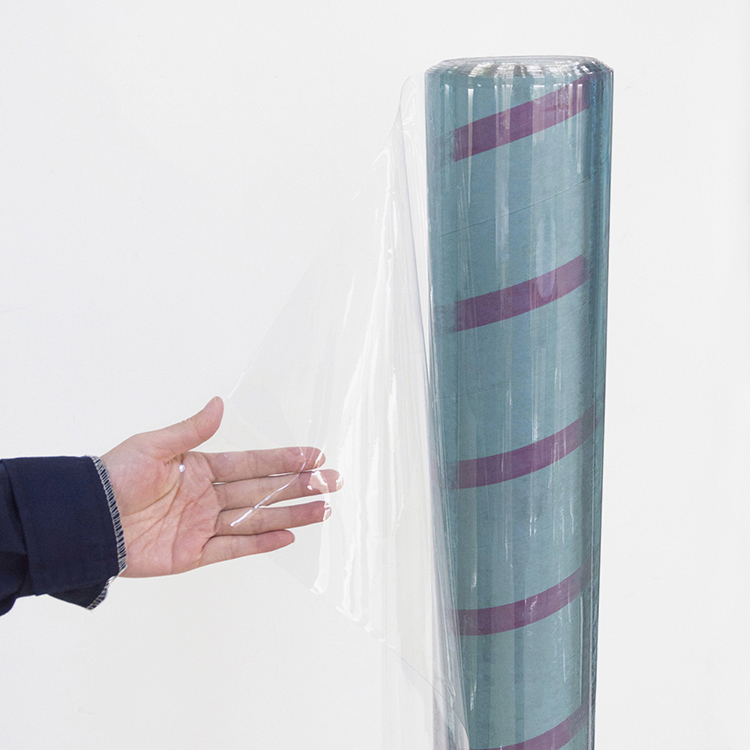
Thermoforming custom packaging trays from PVC sheet has become a cornerstone process in modern packaging manufacturing, particularly for industries requiring protective, precision-fit containments for delicate products. Understanding how PVC sheet performs during thermoforming operations is critical for manufacturers seeking optimal material behavior, dimensional accuracy, and production efficiency. The thermoforming characteristics of PVC sheet directly influence cycle times, tray quality, and the economic viability of packaging production runs, making material performance knowledge essential for decision-makers in packaging procurement and manufacturing operations.
The performance profile of PVC sheet in thermoforming applications encompasses multiple interconnected factors including thermal response characteristics, formability index, surface finish retention, and dimensional stability throughout the heating and forming cycles. Industrial thermoforming operations demand materials that exhibit predictable softening behavior within controlled temperature windows, maintain structural integrity during stretching operations, and deliver consistent wall thickness distribution across complex tray geometries. This comprehensive examination explores the specific mechanisms through which PVC sheet responds to thermoforming processes, the material properties that enable successful tray production, and the practical considerations that determine forming outcomes in real-world manufacturing environments.
Thermal Response and Processing Window Characteristics
Temperature-Dependent Viscosity Behavior
The thermoforming performance of PVC sheet fundamentally depends on its temperature-dependent viscosity transitions, which define the material's workability during the forming cycle. Rigid PVC sheet undergoes a glass transition typically between 75°C and 85°C, transitioning from a brittle glassy state to a rubbery elastic condition suitable for forming operations. As heating continues into the processing window of approximately 120°C to 160°C, the PVC sheet achieves optimal formability where polymer chains possess sufficient mobility for deep draws and complex geometries while retaining enough molecular structure to prevent excessive sagging or premature tearing.
This thermal responsiveness creates a critical processing advantage for custom packaging tray production, as the relatively broad forming window allows manufacturers to accommodate variations in sheet thickness, heating equipment configurations, and production speeds without dramatic quality degradation. The viscosity profile of PVC sheet during heating provides gradual softening rather than abrupt melting, enabling operators to achieve consistent heating across large sheet areas and maintain control throughout the forming cycle. Temperature uniformity becomes achievable because the material tolerates minor temperature gradients without creating weak zones or inconsistent wall distribution in finished trays.
Manufacturing operations benefit from the predictable heating requirements of PVC sheet, as established thermal profiles can be reliably replicated across production runs with minimal adjustment. The material's heat capacity and thermal conductivity characteristics allow for efficient energy transfer from heating elements, whether using radiant ceramic heaters, infrared panels, or contact heating systems. This thermal efficiency translates to shorter heating cycles compared to some alternative thermoplastics, directly improving production throughput and reducing energy consumption per formed tray unit.
Heating Uniformity and Sag Control
Achieving uniform temperature distribution across the entire surface area of PVC sheet before forming represents a critical success factor in producing high-quality custom packaging trays with consistent wall thickness and dimensional accuracy. The thermal conductivity properties of PVC sheet influence how rapidly heat penetrates through the material thickness, with thicker gauge sheets requiring longer heating cycles or higher energy inputs to reach forming temperature throughout the cross-section. Manufacturers must balance heating intensity against the risk of surface overheating, which can degrade material properties or create aesthetic defects on tray surfaces.
Sag control during the heating phase becomes particularly important when thermoforming large-format PVC sheet into packaging trays, as the material's softened state under gravity can create thickness variations before forming commences. The melt strength characteristics of PVC sheet at forming temperature determine how much unsupported span the material can maintain without excessive drooping. Formulations designed specifically for thermoforming applications often incorporate processing aids that enhance melt strength, allowing the heated PVC sheet to retain better dimensional stability during the transition from heating station to forming station in automated production lines.
Advanced thermoforming operations employ zone-controlled heating systems that apply differential thermal energy to specific regions of the PVC sheet based on the final tray geometry requirements. Areas destined for deep draws or tight corners receive additional heating to increase local formability, while regions forming shallow features or flat surfaces receive moderated heating to preserve thickness and minimize material redistribution. This precision thermal management maximizes the forming performance of PVC sheet by optimizing material condition for each geometric feature within the custom packaging tray design.
Formability and Material Flow Dynamics
Draw Ratio Capabilities and Geometric Limitations
The formability of PVC sheet during thermoforming directly determines the geometric complexity achievable in custom packaging trays, with draw ratio serving as a primary performance metric. Draw ratio, defined as the ratio of formed depth to the smallest horizontal dimension, typically ranges from 1:1 for simple shallow trays to potentially 2:1 or higher for deep-cavity designs when forming conditions are optimized. The molecular structure and formulation of PVC sheet influence its ability to stretch uniformly under vacuum or pressure forming forces without premature thinning, webbing between features, or tearing at high-stress concentration points.
Material flow characteristics during forming operations reveal how PVC sheet redistributes from its original uniform thickness to the varied wall sections of the finished packaging tray. Corners and deep pockets experience the greatest material thinning as the PVC sheet stretches to conform to mold surfaces, while flat bottom areas and shallow sidewalls retain thickness closer to the original gauge. Understanding these flow patterns enables packaging engineers to specify appropriate starting sheet thickness that ensures adequate wall strength throughout the tray after accounting for the thickness reduction that occurs during forming. Strategic placement of pull-through features or assist plugs in tooling can improve material distribution by controlling how PVC sheet enters deep cavities.
Complex tray geometries with multiple compartments, undercuts, or intricate detail features challenge the forming limits of PVC sheet and require careful process optimization to achieve acceptable results. The material's elastic memory properties influence how sharply it can conform to fine mold details and how much spring-back occurs after forming pressure is released. Manufacturers producing high-precision custom packaging trays often conduct iterative mold development and process refinement to identify the optimal combination of heating parameters, forming pressure profiles, and cooling rates that maximize dimensional fidelity while maintaining production efficiency.
Surface Finish Retention and Optical Clarity
The surface characteristics of PVC sheet before forming significantly influence the final appearance and functional properties of thermoformed custom packaging trays, making surface finish retention a key performance consideration. High-quality PVC sheet formulated for thermoforming applications maintains smooth, glossy surfaces throughout the heating and forming process, transferring that finish quality to the molded tray without introducing surface defects such as orange peel texture, flow lines, or dull patches. The polymer's rheological properties at forming temperature determine whether surface smoothness persists as the material stretches over mold contours or degrades due to microscopic surface irregularities becoming magnified during extension.
For applications requiring transparent or translucent custom packaging trays, the optical clarity performance of PVC sheet during thermoforming becomes critically important. Clear PVC sheet formulations must resist hazing or cloudiness development during the thermal cycling of the forming process, maintaining light transmission properties that allow product visibility. The material's refractive index stability through heating and cooling cycles, combined with its ability to form without creating internal stress concentrations that scatter light, determines the optical quality of finished transparent trays. Manufacturers targeting premium packaging markets select PVC sheet grades specifically engineered to preserve clarity even in deeply formed sections where material stretching is substantial.
Surface texture replication from mold surfaces to formed PVC sheet enables manufacturers to create custom packaging trays with intentional finishes ranging from high gloss to matte or textured patterns that enhance grip or reduce glare. The conformability of heated PVC sheet to fine mold surface details determines how accurately these textures transfer during forming. Proper mold temperature management and forming pressure application ensure complete contact between softened PVC sheet and mold surfaces, maximizing texture transfer fidelity. This capability allows packaging designers to specify surface characteristics that enhance both aesthetic appeal and functional performance of thermoformed trays.
Dimensional Stability and Cooling Behavior
Shrinkage Control and Tolerance Management
Dimensional accuracy in thermoformed custom packaging trays depends heavily on how PVC sheet responds during the cooling phase of the forming cycle, when the material transitions from its softened forming state back to rigid room-temperature condition. Thermal shrinkage characteristics of PVC sheet determine the final dimensions of molded trays relative to the cavity dimensions of forming molds, requiring manufacturers to account for predictable shrinkage factors during tool design. Typical shrinkage rates for rigid PVC sheet range from 0.3% to 0.8% depending on formulation, forming temperature, and cooling rate, with tighter control achieved through optimized processing parameters.
The cooling rate applied to formed PVC sheet influences both dimensional stability and residual stress levels in finished custom packaging trays. Rapid cooling can lock in dimensional accuracy quickly, reducing cycle times and improving production efficiency, but may introduce internal stresses that cause warping or dimensional drift during subsequent handling or storage. Conversely, controlled gradual cooling allows the PVC sheet molecular structure to relax into a more stable configuration, minimizing residual stress but extending cycle times. Manufacturers balance these competing factors based on tray geometry complexity, dimensional tolerance requirements, and production volume economics to establish optimal cooling protocols.
Thickness-dependent cooling behavior creates challenges when thermoforming PVC sheet into trays with significant wall thickness variation, as thicker sections retain heat longer than thin-walled areas and continue shrinking after thin sections have solidified. This differential cooling can induce warping or distortion in finished trays if not managed through strategic cooling system design. Advanced thermoforming operations employ zone-controlled cooling with differential air flow or chilled water channels positioned to balance cooling rates across the tray geometry, ensuring that all sections reach dimensional stability simultaneously and minimizing stress-induced distortion.
Post-Forming Stability and Environmental Performance
The long-term dimensional stability of thermoformed PVC sheet custom packaging trays depends on how completely the material's molecular structure stabilizes during initial cooling and how it responds to subsequent environmental exposure. Properly processed PVC sheet achieves a stable amorphous structure that resists dimensional changes when exposed to typical warehouse and transportation temperature ranges. However, exposure to elevated temperatures approaching the material's heat deflection temperature can cause dimensional relaxation or warping, particularly in thin-walled tray sections or areas with high residual stress from forming operations.
Moisture absorption characteristics of PVC sheet remain minimal compared to hygroscopic thermoplastics, providing dimensional stability advantages in humid storage environments common in packaging operations. The material's low moisture uptake prevents dimensional swelling or property degradation that could compromise tray fit tolerances or stacking stability. This moisture resistance contributes to the reliable performance of PVC sheet in custom packaging applications where dimensional consistency must be maintained throughout supply chain handling, from initial forming through product loading, storage, and final delivery to end customers.
Chemical resistance properties of thermoformed PVC sheet influence the suitability of formed trays for packaging products that may release vapors or involve contact with oils, solvents, or cleaning agents during use. The material's resistance to a broad range of chemicals ensures that packaging tray dimensions and structural integrity remain stable even when exposed to incidental contact with aggressive substances. This chemical stability, combined with dimensional consistency, makes PVC sheet an appropriate choice for custom packaging trays serving industrial, automotive, electronics, and medical device markets where product compatibility and long-term tray performance are critical selection criteria.
Production Efficiency and Economic Performance Factors
Cycle Time Optimization and Throughput Considerations
The production efficiency achievable when thermoforming PVC sheet into custom packaging trays significantly impacts the economic viability of using this material-process combination versus alternative packaging solutions. The relatively short heating cycles required to bring PVC sheet to forming temperature, combined with rapid cooling characteristics, enable faster overall cycle times compared to some engineering thermoplastics with higher processing temperatures or slower thermal response. This cycle time advantage translates directly to higher hourly production volumes and lower per-unit manufacturing costs, making PVC sheet economically attractive for medium to high-volume packaging tray applications.
Multi-cavity tooling configurations maximize the production efficiency of thermoforming operations by producing multiple custom packaging trays simultaneously from a single sheet of PVC material. The formability and uniform heating characteristics of PVC sheet support successful multi-cavity forming, allowing manufacturers to optimize material utilization while maintaining consistent quality across all cavity positions. Sheet size limitations and press capacity determine the practical maximum number of cavities achievable, but typical production setups produce four to sixteen trays per cycle depending on individual tray size and complexity.
Automation integration capabilities influence the overall equipment effectiveness achievable in PVC sheet thermoforming operations for custom packaging tray production. The material's consistent processing behavior and predictable quality outcomes enable reliable automated loading, forming, trimming, and stacking operations with minimal manual intervention. This automation compatibility reduces labor costs, improves production consistency, and enables lights-out manufacturing for high-volume applications. The combination of fast cycle times, multi-cavity tooling, and automation integration positions PVC sheet thermoforming as a highly productive manufacturing approach for custom packaging tray requirements.
Material Utilization and Scrap Management
Effective material utilization represents a significant economic factor in thermoforming custom packaging trays from PVC sheet, as the process inherently generates trim scrap from the areas surrounding formed parts and from any internal cutouts or openings. Optimizing nesting layouts to maximize the number of trays produced per sheet while minimizing web width between parts improves material yield and reduces waste generation. The dimensional stability and forming consistency of PVC sheet support tight nesting tolerances, allowing manufacturers to minimize scrap percentages while maintaining adequate material for secure clamping and uniform forming across all cavity positions.
Scrap reclamation systems for PVC sheet trim enable manufacturers to recover economic value from production waste while supporting environmental sustainability objectives. Trim material can be ground and reprocessed into lower-grade applications or blended back into virgin PVC sheet formulations at controlled percentages that maintain acceptable performance characteristics. The thermal stability of PVC sheet during reprocessing operations facilitates successful regrind incorporation without severe property degradation, though manufacturers must carefully control regrind percentages and implement quality testing protocols to ensure that recycled content does not compromise thermoforming performance or finished tray properties.
Skeleton scrap separation and handling systems integrated with thermoforming lines streamline material recovery by automatically removing trim waste after part cutting and conveying it to grinding equipment or collection systems. The stiffness and structural integrity of PVC sheet skeleton material facilitate mechanical handling without excessive breakage or tangling that could disrupt automated material recovery operations. Efficient scrap handling contributes to overall production line efficiency by minimizing manual labor requirements and maintaining clean, organized manufacturing environments that support consistent quality and operational safety.
Material Selection Criteria for Optimal Thermoforming Performance
Formulation Specifications and Performance Trade-offs
Selecting the appropriate PVC sheet formulation for custom packaging tray thermoforming applications requires understanding how various compounding ingredients influence processing behavior and finished part properties. Rigid PVC sheet formulations balance polymer molecular weight, plasticizer content, impact modifier selection, processing aid types, and stabilizer systems to achieve target combinations of formability, clarity, impact resistance, and thermal stability. Higher molecular weight PVC resins provide increased melt strength and better thermoforming performance for deep-draw applications but may require higher processing temperatures and longer heating cycles that reduce production efficiency.
Impact modifier selection influences both the toughness of formed PVC sheet trays and the material's behavior during thermoforming operations. Acrylic-based impact modifiers maintain optical clarity for transparent packaging applications while providing moderate impact resistance, whereas MBS or CPE modifiers deliver higher impact performance but may slightly reduce clarity. The concentration of impact modifiers affects processing characteristics, with higher loadings typically increasing melt viscosity and potentially narrowing the optimal forming temperature window. Manufacturers must balance impact performance requirements against processing efficiency and cost considerations when specifying PVC sheet for particular custom packaging tray applications.
Processing aid packages incorporated into thermoforming-grade PVC sheet formulations improve material flow characteristics, enhance surface quality, and promote uniform heating behavior during production operations. These additives facilitate polymer chain disentanglement during heating, reducing the temperature required to achieve forming viscosity and improving surface finish on molded parts. External lubricants in the formulation control mold release properties and influence the surface friction characteristics of formed trays, affecting how easily finished parts separate from tooling and how trays stack or nest during subsequent handling operations.
Thickness Selection and Gauge Considerations
Determining the appropriate starting thickness of PVC sheet for thermoforming custom packaging trays involves analyzing the required structural performance of finished trays while accounting for the material thinning that occurs during forming operations. Thicker gauge PVC sheet provides greater structural rigidity and impact resistance in finished trays but requires longer heating cycles, higher forming pressures, and generates more material cost per part. Conversely, thinner gauge material enables faster cycle times and lower material costs but may result in insufficient structural performance for demanding packaging applications or complex geometries with significant draw depth.
Wall thickness distribution analysis in thermoformed PVC sheet trays reveals how starting gauge relates to minimum wall thickness in critical load-bearing areas after forming. Deep corners and tight radii experience the greatest material thinning, potentially reducing wall thickness to 40-60% of the original sheet gauge depending on draw ratio and forming conditions. Packaging engineers specify starting PVC sheet thickness that ensures adequate minimum wall thickness in these critical areas while avoiding excessive thickness and material waste in less-stressed regions. Finite element analysis tools can predict thickness distribution patterns, enabling optimized gauge selection during the design phase.
Standard thickness ranges for thermoforming-grade PVC sheet typically span from 0.25mm for lightweight disposable packaging trays to 3mm or thicker for heavy-duty industrial tray applications requiring maximum structural performance. The availability of consistent gauge control across sheet width and length influences forming quality, as thickness variations create localized differences in heating requirements and forming behavior that can cause quality defects. Premium thermoforming-grade PVC sheet maintains tight thickness tolerances, typically within ±5% to ±10% of nominal gauge, ensuring consistent processing results across production runs.
FAQ
What temperature range is optimal for thermoforming PVC sheet into packaging trays?
The optimal thermoforming temperature range for PVC sheet typically falls between 120°C and 160°C, depending on the specific formulation, sheet thickness, and complexity of the tray geometry being formed. Within this range, the material achieves sufficient softening for deep draws and complex features while maintaining enough structural integrity to prevent excessive sagging or tearing. Manufacturers should conduct heating trials to identify the specific temperature that delivers the best combination of formability, surface quality, and cycle time efficiency for their particular PVC sheet grade and tray design, as formulation variations can shift the optimal processing window by 10-15°C in either direction.
How does PVC sheet thickness affect thermoforming cycle time and tray quality?
Thicker PVC sheet requires proportionally longer heating cycles to achieve uniform temperature distribution through the material cross-section, directly increasing overall cycle time and reducing production throughput. However, thicker starting gauge provides more material for redistribution during forming, resulting in thicker walls in the finished tray that deliver improved structural rigidity and impact resistance. The relationship between thickness and quality depends on the specific application requirements, as excessively thick material may be economically inefficient while insufficient thickness can compromise tray performance. Manufacturers optimize this balance by selecting the minimum PVC sheet thickness that meets structural requirements after accounting for material thinning during the forming process.
Can PVC sheet maintain dimensional accuracy in deeply formed packaging tray geometries?
PVC sheet can maintain acceptable dimensional accuracy in moderately deep-draw packaging tray applications when processing parameters are properly optimized and appropriate tooling design principles are followed. Draw ratios up to approximately 1.5:1 are generally achievable with good dimensional control, while deeper geometries approaching 2:1 or beyond require careful attention to heating uniformity, material distribution management, and cooling control to minimize distortion and maintain tolerances. Dimensional accuracy depends on controlling shrinkage during cooling, managing residual stress development, and accounting for material memory effects that can cause minor dimensional changes after part removal from tooling. For critical tolerance applications, manufacturers should validate dimensional stability through production trials and implement statistical process control to monitor consistency.
What are the primary limitations of using PVC sheet for thermoformed custom packaging trays?
The primary limitations of PVC sheet in thermoforming applications include temperature sensitivity that restricts use in high-heat environments above approximately 60-70°C, potential brittleness in very thin-walled sections particularly at low temperatures, and environmental considerations regarding end-of-life disposal and recycling infrastructure availability. The material's relatively limited elongation at break compared to some alternative thermoplastics can restrict the maximum achievable draw ratios for extremely deep or complex tray geometries. Additionally, certain PVC sheet formulations may exhibit slight discoloration or property changes when exposed to prolonged UV radiation, potentially limiting outdoor storage applications. Despite these constraints, the combination of cost-effectiveness, processing efficiency, and adequate performance characteristics makes PVC sheet suitable for the majority of custom packaging tray applications across diverse industrial markets.
Table of Contents
- Thermal Response and Processing Window Characteristics
- Formability and Material Flow Dynamics
- Dimensional Stability and Cooling Behavior
- Production Efficiency and Economic Performance Factors
- Material Selection Criteria for Optimal Thermoforming Performance
-
FAQ
- What temperature range is optimal for thermoforming PVC sheet into packaging trays?
- How does PVC sheet thickness affect thermoforming cycle time and tray quality?
- Can PVC sheet maintain dimensional accuracy in deeply formed packaging tray geometries?
- What are the primary limitations of using PVC sheet for thermoformed custom packaging trays?