 EN
EN

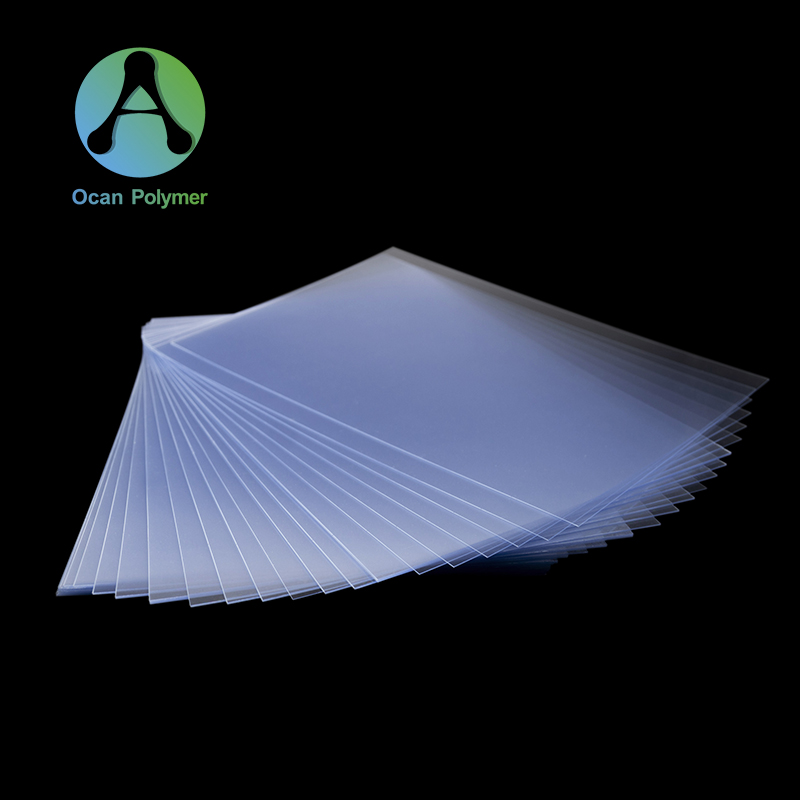
The PVC sheet has become one of the most versatile plastic materials used across a wide range of industries, and the stationery and bookbinding sector is no exception. From school supply covers to professional document folders, the PVC sheet offers a compelling combination of clarity, durability, and ease of processing that makes it a go-to material for manufacturers and designers alike. Whether you are producing presentation binders, report covers, or protective file jackets, understanding how the PVC sheet can be applied in these contexts is essential for making informed material decisions.
In this article, we explore the specific ways a PVC sheet is integrated into stationery products and binding covers, what properties make it suitable for these applications, how it compares functionally to alternative materials, and what buyers and manufacturers should consider when selecting a PVC sheet for these uses. If you work in product development, procurement, or design within the stationery or office supply industry, the following guide will help you understand the real-world utility of the PVC sheet in this product category.
The Role of PVC Sheet in Modern Stationery Products
Why PVC Sheet Is Favored for Stationery Applications
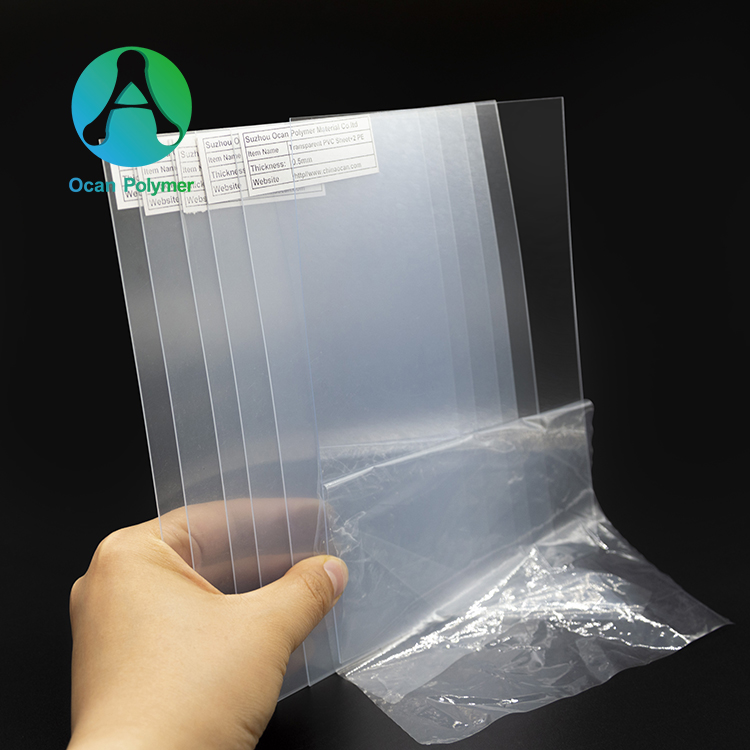
The adoption of PVC sheet in the stationery industry has been driven primarily by its excellent transparency and surface finish. When manufacturers produce report covers or presentation folders, the ability to see the document title through a clear front cover is a key functional requirement. The PVC sheet can be produced with exceptional optical clarity, allowing documents to remain readable beneath the cover without any distortion.
Beyond transparency, the PVC sheet provides a high degree of flexibility at thinner gauges, enabling it to fold neatly around document edges without cracking. This is critical for folders and file covers that need to open and close repeatedly during daily office use. The material also resists moisture and minor liquid spills, protecting the contents of the binder from environmental damage — a practical advantage in busy work or school environments.
Another reason the PVC sheet dominates this market segment is its cost efficiency. Relative to polycarbonate or other engineering plastics, the PVC sheet is produced at a lower raw material cost, which translates into competitively priced finished stationery products without sacrificing performance. This makes it commercially viable for mass-market office supply brands and educational stationery manufacturers.
Common Stationery Products That Use PVC Sheet
Among the most widespread applications, report covers and presentation folders are perhaps the clearest example of how a PVC sheet serves both a functional and aesthetic purpose. The transparent front cover allows a branded title page or document header to be displayed professionally while protecting the printed material underneath. These products are ubiquitous in corporate offices, universities, and government agencies worldwide.
Business card holders and index tab dividers are additional stationery items that frequently use the PVC sheet. In card holders, the clarity and dimensional stability of the sheet ensure that cards remain visible and securely held without yellowing or distorting over time. For tab dividers, a semi-rigid PVC sheet provides the stiffness needed to withstand repeated handling and flipping through multi-section binders.
Zippered pencil pouches, A4 document pockets, and overlay panels in ring binders also rely on the PVC sheet for their construction. In these cases, the sheet is often laminated or heat-sealed at the edges, taking advantage of the material's thermoplastic nature to form secure, watertight seams without adhesives. This processing flexibility is one of the reasons the PVC sheet continues to dominate the manufacture of soft stationery organizers.
How PVC Sheet Is Used in Binding Covers
Front and Back Cover Construction with PVC Sheet
In bookbinding and document binding, the PVC sheet serves a structural role as the front and back covers of bound documents. These covers are typically cut to standard paper sizes — A4, A5, Letter, or Legal — and designed to encase the bound pages within a rigid or semi-rigid protective shell. The PVC sheet used for this purpose is generally between 0.3mm and 1.0mm in thickness, with the gauge selected based on the required stiffness and the binding method used.
For thermal binding and comb binding applications, transparent PVC sheet covers are almost universally used as the front panel. They allow the decorative or informational first page of the document to remain visible without being removed from the binding. Back covers in these applications are often made from heavier, opaque cardstock or board, but the front cover is consistently the PVC sheet due to its visual clarity.
Spiral-bound notebooks and course materials also frequently use a PVC sheet as the protective front cover. In educational publishing and corporate training materials, this ensures the document can be handled, carried, and stored without the cover curling or tearing as a paper cover might. The resilience of the PVC sheet significantly extends the service life of these bound documents.
Finishing and Processing Techniques Applied to PVC Sheet in Binding
The PVC sheet used in binding applications can be processed with a variety of surface treatments to enhance its visual appeal and functional performance. Embossing, for example, allows manufacturers to add texture or decorative patterns to the cover surface, creating a premium appearance while also improving grip. This is particularly popular in branded corporate stationery products and customized presentation folders.
Screen printing and digital printing on a PVC sheet surface enable the creation of fully branded covers with logos, colors, and design elements. UV printing is also compatible with many grades of PVC sheet, producing sharp, fade-resistant graphics that remain intact across prolonged use. These printing capabilities make the material suitable for promotional stationery, event programs, and limited-edition office supply collections.
Die-cutting is another common technique applied to the PVC sheet in binding cover production. Manufacturers can cut precise shapes, including windows, rounded corners, notches, and custom profiles, using standard die-cutting equipment. This flexibility allows for differentiated product designs that stand out in retail stationery displays or corporate gifting applications. The compatibility of the PVC sheet with these secondary processing steps is a key part of its appeal in the binding industry.
Material Properties That Define PVC Sheet Performance in These Uses
Thickness, Clarity, and Flexibility as Key Parameters
When selecting a PVC sheet for stationery or binding cover applications, three physical properties are most frequently evaluated: thickness, optical clarity, and flexibility. Thickness controls both the stiffness of the cover and its durability in use. A PVC sheet that is too thin may curl or tear easily, while one that is too thick may be difficult to process through standard die-cutting and folding equipment. The sweet spot for most binding cover applications typically falls between 0.3mm and 0.6mm.
Optical clarity is measured by how well the sheet transmits light without haze, distortion, or color tint. High-clarity PVC sheet grades are essential for front covers that must display underlying documents legibly. Haze values and light transmission percentages are the technical parameters buyers use to evaluate this property during material sourcing. For report covers and presentation folders, a transmission rate above 85% is generally preferred.
Flexibility and elongation properties determine how well the PVC sheet handles repeated bending without fatigue or cracking. Stationery products undergo significant mechanical stress — they are opened, closed, folded, and stacked hundreds of times during their service life. A PVC sheet with adequate plasticizer content will maintain its flexibility across temperature variations and repeated mechanical cycling, ensuring the product remains functional and attractive over time.
Color, Surface Finish, and Environmental Compliance
Beyond clear grades, the PVC sheet is available in a broad range of colors and surface finishes, which significantly expands its design potential in stationery applications. Frosted, matte, glossy, and satin surface finishes allow product designers to achieve distinctive tactile and visual effects. Colored PVC sheet in translucent blue, green, red, or orange tones is widely used for categorized filing systems, where different colors denote different document categories or departments.
Environmental compliance is an increasingly important consideration in the selection of a PVC sheet for stationery products. Buyers in European, North American, and increasingly Asian markets are requiring that the materials used in their products comply with restrictions on hazardous substances — including phthalate plasticizers, heavy metal stabilizers, and other regulated additives. Compliant grades of PVC sheet are formulated to meet standards such as RoHS, REACH, and EN71 for toy safety, ensuring suitability across diverse global markets.
For buyers seeking a plastic sheet solution that combines the visual clarity of traditional PVC sheet with enhanced environmental credentials, polypropylene (PP) sheet has emerged as a noteworthy alternative. You can explore a quality PVC sheet alternative specifically engineered for stationery and file-making applications to understand how material choices in this segment are evolving. Making informed comparisons between materials helps procurement professionals select the most suitable option for their specific product requirements.
Practical Considerations When Sourcing PVC Sheet for Stationery Manufacturing
Evaluating Supplier Specifications and Sheet Tolerances
When sourcing a PVC sheet for industrial-scale stationery production, consistency in thickness tolerance is one of the most critical specifications to verify. Variations in sheet thickness can cause problems in folding, heat sealing, and die-cutting processes, leading to increased waste and higher rejection rates on the production line. Reputable suppliers will provide tolerance data and quality control certifications that define the acceptable range of dimensional variation in each batch of PVC sheet supplied.
Surface quality is equally important. A PVC sheet intended for printed covers must have a smooth, contamination-free surface that accepts inks and coatings uniformly. Fish eyes, gels, or surface inclusions in the sheet will result in printing defects that are costly to manage. Requesting sample runs and conducting print adhesion tests before committing to large-volume orders is a standard practice among experienced stationery manufacturers when qualifying a new PVC sheet supplier.
Lead times, roll versus cut sheet formats, and minimum order quantities are logistical factors that can significantly affect production planning when sourcing PVC sheet. Many manufacturers prefer to purchase the PVC sheet in roll format for high-speed web-fed cutting lines, while smaller operations or those producing custom-size products may prefer pre-cut sheets in standard formats. Clarifying these requirements early in the supplier evaluation process prevents supply chain disruptions during production ramp-up.
Cost-Benefit Analysis and Volume Considerations
The economics of using a PVC sheet in stationery manufacturing are generally favorable, particularly at higher production volumes. The relatively low raw material cost of PVC sheet, combined with its high processability and low scrap rates in standard cutting and forming operations, results in a competitive per-unit material cost for most standard stationery applications. This is a key reason the material has maintained its dominant position in the global stationery supply chain despite the emergence of alternative materials.
At lower production volumes or for specialty products, the cost calculation for PVC sheet becomes more nuanced. Custom colors, specialty surface finishes, or regulated formulations may carry higher minimum order quantities and longer lead times that affect the overall project economics. In these cases, buyers should evaluate whether the functional and design advantages of a specific PVC sheet grade justify the additional sourcing complexity compared to standard commodity-grade sheet.
Finally, end-of-life disposal and recyclability are factors that increasing numbers of corporate procurement teams are incorporating into their material cost models. Standard PVC sheet can be recycled, but it requires segregated collection and specialized recycling streams that are not universally available. This reality is prompting some brands to evaluate recyclable alternatives, though the functional performance of the PVC sheet in stationery and binding applications continues to make it a difficult material to fully replace in high-volume contexts.
FAQ
What thickness of PVC sheet is best for binding covers?
For most standard binding cover applications, a PVC sheet thickness between 0.3mm and 0.6mm offers the best balance of clarity, flexibility, and structural protection. Thinner gauges around 0.2mm may be used for lightweight document pockets, while thicker grades approaching 1.0mm are occasionally used for heavy-duty binder covers that require greater rigidity and impact resistance.
Can PVC sheet be printed on for custom stationery covers?
Yes, a PVC sheet can be printed using screen printing, UV offset printing, and digital printing methods. The key requirement is that the surface of the PVC sheet must be clean and, in some cases, treated with a corona discharge or primer to improve ink adhesion. Solvent-based inks and UV-curable inks are both commonly used on PVC sheet surfaces with excellent durability results.
Is PVC sheet suitable for eco-friendly or RoHS-compliant stationery products?
Compliant grades of PVC sheet are available that meet RoHS, REACH, and other relevant environmental regulations by using non-phthalate plasticizers and heavy metal-free stabilizer systems. Buyers requiring compliant materials should specifically request certified eco-grade PVC sheet from their suppliers and ask for documentation such as material safety data sheets and third-party test reports confirming regulatory compliance.
What is the difference between PVC sheet and PP sheet for stationery use?
Both the PVC sheet and polypropylene (PP) sheet are widely used in stationery applications, but they have distinct material properties. The PVC sheet offers superior optical clarity, easier heat sealing, and a softer feel, making it preferred for transparent report covers and document pockets. PP sheet, on the other hand, is inherently more chemically resistant, lighter in weight, and considered more environmentally favorable due to its simpler recyclability profile, making it increasingly popular for eco-branded stationery products and file folders.